 17% OFF
Inventory Management System in Python and AI Chatbot
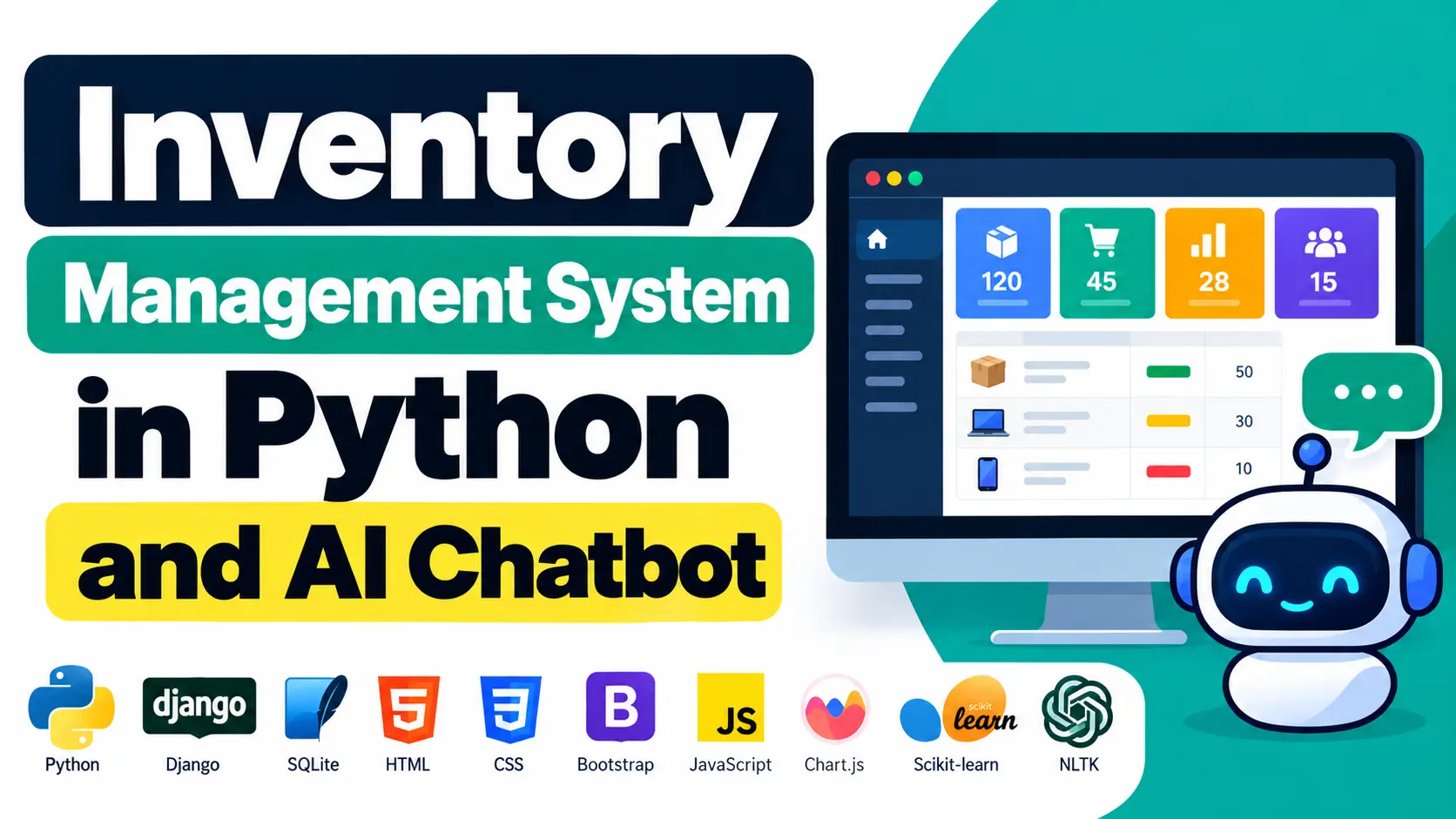
Inventory Management System in Python and AI Chatbot is a Django-based application developed using Python, SQLite, HTML, CSS, Bootstrap, JavaScript, Chart.js, Scikit-learn, and NLTK. It includes four role-based panels: Admin, Staff, Vendor, and Customer. The system manages products, stock, warehouses, purchase orders, sales, billing, payments, returns, expenses, reports, and an AI chatbot named UG Assist.
Read more- Built with
- PythonDjangoMachine LearningBootstrapHTML/CSSJavaScript
- You get
- Source codeDatabaseProject reportPPTSetup guide
- Delivery
- Instant download after payment
Project Overview
Inventory Management System in Python and AI Chatbot is a Django-based application with four separate role-based panels: Admin, Staff, Vendor, and Customer. It provides inventory operations, product management, warehouse stock tracking, purchase orders, sales, billing, payments, returns, expenses, and reports.
The system also includes UG Assist, a machine-learning chatbot that provides inventory-related answers using live database information. It uses NLTK and Scikit-learn to classify user questions and provide information about stock, prices, sales, profit, invoices, purchase orders, payments, and returns.
Key Features
- Four role-based panels: Admin, Staff, Vendor, and Customer.
- Custom inventory dashboard with nine live KPI cards and six Chart.js charts.
- Product management with SKU, barcode, category, supplier, unit, prices, tax, reorder level, and stock history.
- Warehouse stock management, adjustments, transfers, and movement history.
- Purchase order management with draft, ordered, shipped, received, and cancelled statuses.
- Sales management with POS-style builder, barcode scanning, discounts, partial payments, and printable invoices.
- Customer and supplier returns management.
- Payment receipts and supplier payouts.
- Expense tracking by category.
- Reports for sales, purchases, stock valuation, profit and loss, tax, expenses, and receivables.
- Code 39 barcode generation and printable labels.
- Low-stock notifications and one-click Create PO.
- CSV import and export with search and filter support.
- UG Assist AI chatbot with live inventory information.
- Chatbot analytics, conversation history, feedback, and model retraining.
- Dark and light modes with a collapsible sidebar.
Technologies and Libraries Used
- Python: Main programming language.
- Django: Web application framework.
- SQLite: Database.
- HTML: Frontend structure.
- CSS: Interface styling.
- Bootstrap: Frontend framework.
- JavaScript: Frontend functionality.
- Chart.js: Dashboard charts and data visualization.
- Scikit-learn: Machine learning and chatbot classification.
- NLTK: Text processing and chatbot functionality.
Admin Panel
Staff Panel
Vendor Panel
Customer Panel
Dashboard Management
Product Management
Stock Management
Warehouse Management
Purchase Order Management
Sales Management
Billing and Invoice Management
Returns Management
Payments Management
Expense Management
Reports Management
Barcode Management
CSV Import and Export
UG Assist AI Chatbot
Chatbot Analytics
Requirements
- Python 3.11 or 3.12 (64-bit)
- VS Code
- Internet connection for CDN resources
Step 1: Open Project Folder
cd C:\path\to\updategadh_inventory
code .
Step 2: Create Virtual Environment
python -m venv .venv
Set-ExecutionPolicy -Scope Process -ExecutionPolicy Bypass
.\.venv\Scripts\Activate.ps1
Step 3: Install Dependencies
python -m pip install --upgrade pip
pip install -r requirements.txt
Step 4: Apply Migrations
python manage.py makemigrations accounts inventory chatbot
python manage.py migrate
Step 5: Load Demo Data and Train Chatbot
python manage.py seed_demo
Step 6: Run Server
python manage.py runserver
Open http://127.0.0.1:8000/ in your browser.
Stuck while running it? Chat with us on WhatsApp for free installation help.
No reviews yet. Be the first to review this project.