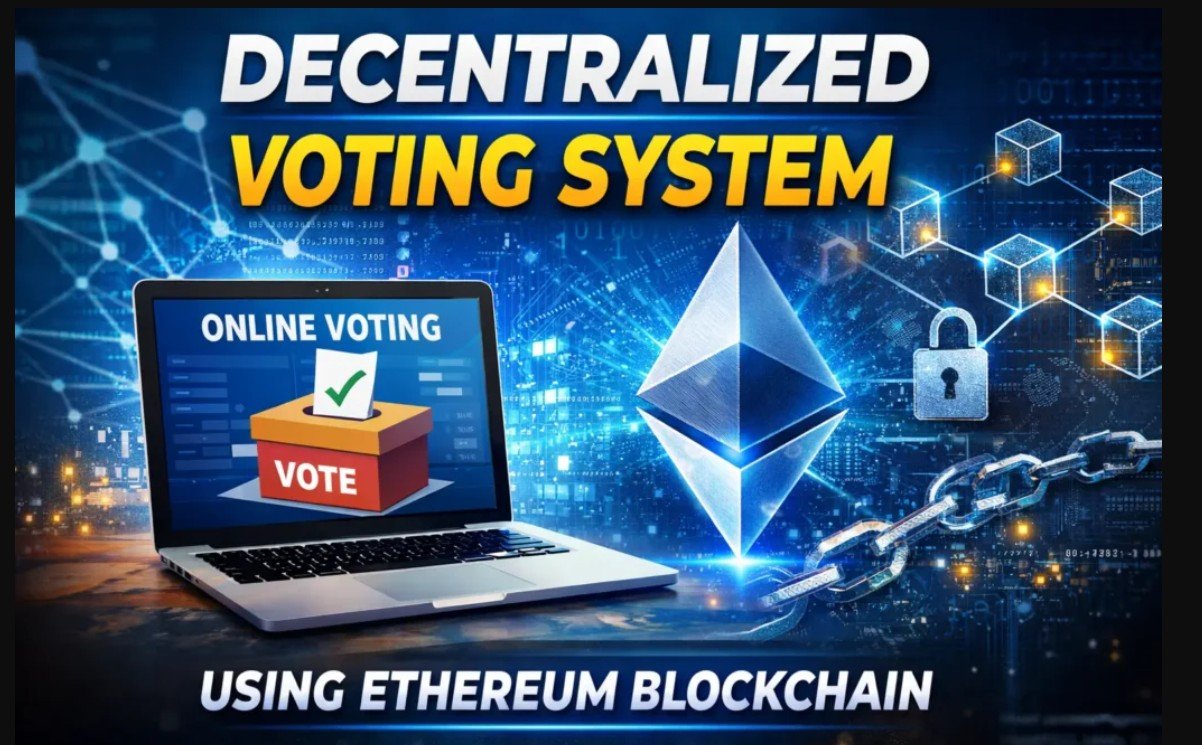
Demo Video
Voting System Using Blockchain
Ethereum blockchain voting system with smart contracts, MetaMask login, admin panel and live results. Full source code for final year projects.
What You Will Get
Voting System Using Ethereum Blockchain - Complete Source Code
Elections only work when people trust the count. This Decentralized Voting System Using Ethereum Blockchain replaces the "just trust the admin" model with smart contracts, where every vote is written to the blockchain and can never be edited, deleted or double-cast. It is one of the strongest final year project choices for BCA, MCA, B.Tech CS/IT and MCA students who want something beyond a normal management system.
You get the complete working source code, smart contracts, database API, setup guide and demo video, ready to run on your own machine.
Why Blockchain for Voting
| Traditional Problem | Blockchain Solution |
|---|---|
| Admin can edit stored votes | Smart contract logic is immutable once deployed |
| Same person votes twice | Contract tracks each wallet address and rejects duplicates |
| Central server goes down | Decentralized ledger with no single point of failure |
| No way to audit the result | Every transaction is publicly verifiable |
| Database can be hacked | Records cannot be overwritten or removed |
Key Features
- Secure voter authentication and authorization using JWT
- Tamper-proof vote recording on the Ethereum blockchain
- MetaMask wallet integration for voter identity
- Admin panel to add and manage candidates
- Election start and end date control
- Real-time result monitoring as votes are cast
- Duplicate vote prevention at the smart contract level
- Candidate profile display for informed voting
- Clean, simple interface for first-time users
Technology Stack
| Component | Technology |
|---|---|
| Blockchain | Ethereum |
| Smart Contract Tools | Truffle, Ganache |
| Frontend | HTML, CSS, JavaScript |
| Backend Support | Node.js |
| API Layer | FastAPI (Python) |
| Database | MySQL |
| Wallet | MetaMask |
System Requirements
- Node.js version 18.14.0
- Python version 3.9
- MySQL running on port 3306
- Ganache for the local blockchain
- Truffle installed globally
- MetaMask browser extension
How the System Works
The admin logs in, creates the candidate list and sets the voting window. A voter registers, authenticates through JWT and connects their MetaMask wallet. When the voter submits a choice, the vote is sent as a transaction to the deployed smart contract on the Ethereum network, where the contract checks whether that wallet address has already voted before accepting it. Results are read directly from the chain, so the displayed count always matches what is actually recorded.
MySQL is used alongside the blockchain for voter profile data and authentication, which makes the project easy to demonstrate while keeping the vote itself on-chain.
Why Examiners Like This Project
- Blockchain is a current, in-demand topic, not a repeated management system
- Gives you real material for viva questions on decentralization and smart contracts
- Combines four skills in one build: Solidity, Node.js, Python API and MySQL
- Strong portfolio and interview talking point
- Extendable to university elections, club polls and society voting
What You Will Receive
- Complete project source code
- Smart contract files and migration scripts
- Database file and API module
- Step-by-step installation guide
- Demo video reference
- Support for setup issues
Future Scope
The project can be extended with OTP or biometric verification, mobile responsive UI, role-based dashboards, election result reports, cloud deployment and migration to a public Ethereum testnet such as Sepolia.
Demo Video
Watch the full project walkthrough here: Voting System Using Ethereum Blockchain - Demo
Full Project Details
Read the complete write-up on our blog: Voting System Using Ethereum Blockchain
Note: This project is provided for educational and academic purposes. Basic knowledge of Node.js, Python and MetaMask will help you set it up faster.
Project Modules
- Admin login and authentication
- Add, edit and remove candidates
- Set election start and end date
- Start and stop the voting session
- View live vote count and final result
Voter Module:
- Voter registration and JWT-based login
- Connect MetaMask wallet
- View candidate list with details
- Cast a single vote recorded on the blockchain
- View election status and published results
Blockchain Module:
- Smart contract for candidate registration
- Vote casting function with duplicate prevention
- Wallet address mapping for one-person-one-vote
- Contract deployment through Truffle migration
- Local Ethereum network on Ganache
Database API Module:
- FastAPI service for voter data
- MySQL voter table and credentials handling
- Token generation and verification
Installation Guide
1. Download and extract the ZIP file
2. Install and open Ganache, then create a new workspace
3. Install the MetaMask extension and connect it to the Ganache local network
4. Create the MySQL database and import the provided voter table
5. Install Truffle globally: npm install -g truffle
6. Run npm install in the main project folder
7. Run pip install -r requirements.txt inside the database API folder
8. Update the DB credentials in the .env file inside the database API folder
9. Compile contracts: truffle console, then compile
10. Bundle the app JavaScript for the browser
11. Start the Node.js server: npm run dev
12. In a second terminal, start the FastAPI server from the database API folder
13. In a third terminal, run: truffle migrate
14. Open the local URL in your browser and start voting
FAQ for this project coming soon.
No reviews yet. Be the first to review!
Write a Review
Related Projects
 33% OFF
Featured
33% OFF
Featured
 Featured
 38% OFF
Hot
38% OFF
Hot
 38% OFF
Hot
38% OFF
Hot